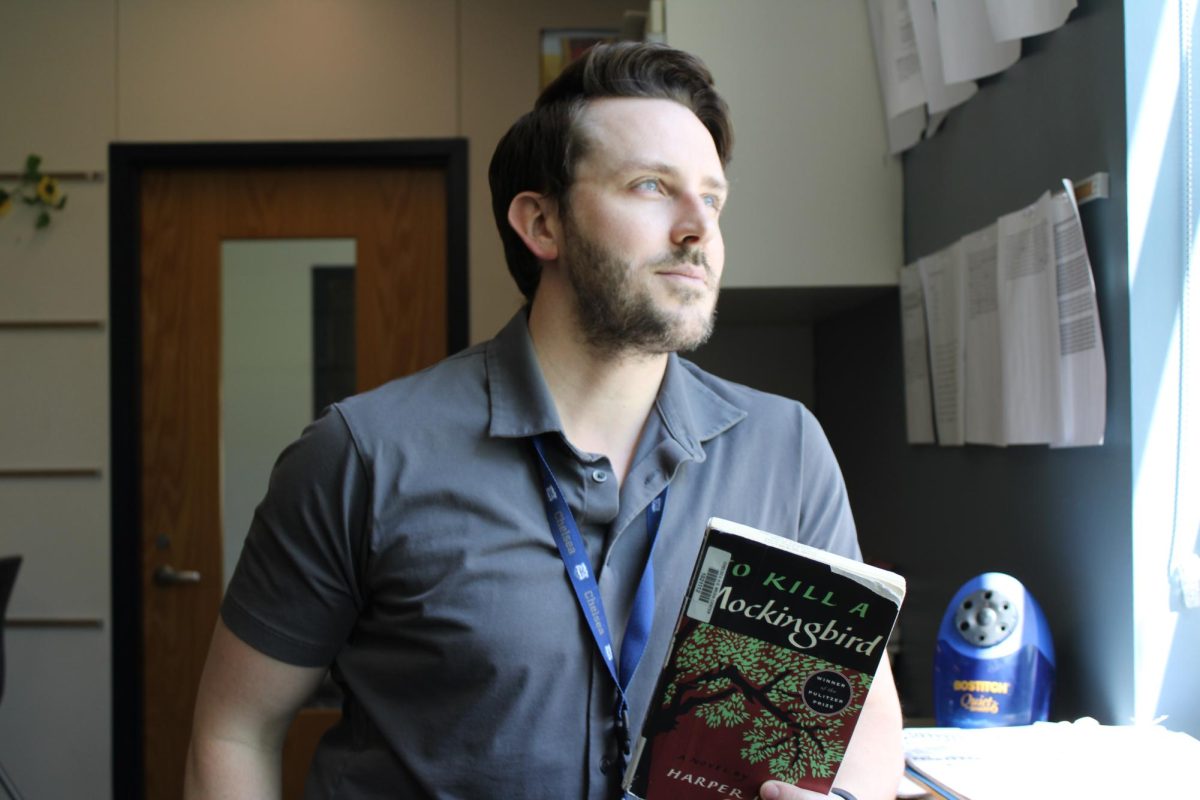

Following discussions about a new club, many students began wondering how clubs are established and what steps are required to make them official. Math teacher Chris Orlandi spoke about the launch of the advancement club for young men, a club for male students who seek academic and emotional support. Many sought clarification about the club’s intentions; now, administrators are focused on helping students understand how clubs are formed, and how both students and staff can begin clubs while following school guidelines.
“When creating a club, first a form is sent to Mrs. McKee that asks what’s the name of the club, what is the purpose of the club, what will you be doing, and who’s your staff advisor? The staff advisor is somebody who’s just there at the club, don’t have to participate in anything,” Principal Amanda Clor said.
According to Clor, anyone interested in starting a club must first complete an application outlining the club’s necessities and needs with an advisor. The advisor’s role is limited to supervision rather than leadership.
“While both students and staff can initiate a club, most of the clubs at Chelsea have been started by students, so we have to take a pause on this [Men’s Club] and figure out the details and how it’s going to work,” Clor said.
She adds that all new clubs are reviewed to make sure they help students and follow school rules. Administrators take time to look over each club application to be sure those goals are met. Clor said the main focus is making sure clubs give students a positive place to learn new skills, meet others, and explore what they enjoy.
“The objective behind new clubs is to create opportunities for students to grow and prepare for life after high school,” Clor said.
Recent discussions have shown that conversations about new clubs can sometimes lead to confusion or misunderstandings, especially when emotions are involved. School leaders say that intentions may not always come across clearly in these situations.
“What is meant to start a supportive opportunity can sometimes be interpreted differently by people,” Clor said.
To make sure all steps are taken correctly and safely for club creations, administrators are reviewing how future club proposals move forward to ensure student leadership is involved and policies are correctly followed.
“We’re just kind of at a pause right now,” Clor said. “There’s still a lot of people who want the club to happen.”
Behind the Purpose – Who Is the Club For?
CHS has faced a recent controversy as Orlandi’s new club gets mixed reviews. When the original email was first sent out to the male students, Orlandi included data to support the necessity of the club. The men who received this email seemed to have some conflicting opinions when comparing purpose and execution.
“I believe Mr. Orlandi was trying to communicate that he wanted to start a new club, and he was trying to provide statistics that showed why he was interested,” Bradley Dunn said.
The necessity of the club is a common thread of support. Dunn shared his thoughts throughout class periods following the original email release, and saw the underlying value in the club and its academic benefits.
“It’s a good opportunity for guys or whoever, to get together and learn skills,” Dunn said. “He was talking about job interviews, and building your resume, extracurriculars. I think that’s helpful for people and it’s a necessary life skill that we don’t necessarily teach in school.”
The statistics Orlandi provided in his original email showed how women make up a majority of academic successes and to claim that men have “fallen behind”. Some of the statistics included the majority of student council members being female, top college graduates, and top GPS.
“[The club is] necessary because of the statistics he provided about how females dominated males, and the GPA and clubs,” Miles Davidson said.
The word choice Orlandi used in the email got perceived in different ways. The addition of this club stirred up mixed emotions when considering the preexisting women in the leadership club.
“The way that he sent out the email was a little unprofessional,” Tristan Murillo said. “I think it was controversial, because of some of the words he said in the email, it almost sounded like he was downplaying the [Women in Leadership Club].”
The club was intended to apply support to male students and help them craft things like college applications and other projects that promise success. Davidson pondered whether the support that comes from the school is gender oriented.
“I think support is for everyone, I don’t think it’s different from female to male. I think it’s the same for everyone,” Davidson said.
The statistics in the email were left up to interpretation, but one thing Dunn and Davidson both agree on is that whether or not Orlandi’s email was objectionable, the intention was pure.
“I think it’s a good opportunity, and I think Mr. Orlandi is trying to do a good thing,” Dunn said.
Implications & Equity – Who Felt Left Out?
When Orlandi sent out a recruitment email to the majority of the male population at CHS, some girls at CHS felt they were excluded from the email. And when we asked them, they had different interpretations of the situation.
“In the past, in our history, men have very much been in control more than women and had more power. Even now, we’ve never had a woman be president, but I think for the start of the Women in Leadership Club, that was an important thing that many people have joined and helped do fundraisers for and other things in our community. It felt as if he was trying to take away from the success of women in our community,” Landry Cook (‘28).
On one hand, some girls feel the apology was focusing on the girl’s feelings rather than taking responsibility for the original message. On the other hand, some think the message wasn’t harmful, just poorly worded and readers struggled to understand his intent.
“I don’t think he really meant any harm with his email. I just feel like it could have been taken in a different way, and I think that the main thing was just for young men to get help with school. It just could’ve been said a little differently,” Peyton Myers (‘28).
Some thought focusing on the intent behind the email, suggesting it aimed to support young men was fine but some thought it was phrased awkwardly, but some thought this message was underplaying women’s success and using unnecessary facts.
“Mr. Orlandi chose to compare the statistics like women’s statistics and not male statistics for his men in leadership club, and the word choice in the email was not the best word choice. It felt like it was targeting women and trying to take away from their success and the fact that they’re succeeding and doing,” Cook said.
Many thought that some of the decisions that were made could be changed and some thought it was seen as taking away their success. Many students hope that in the future, a better approach can be taken that doesn’t target or downplay women and their success.
“I know the club is not running right now, but I hope that in the future, maybe a better version of this can come about without it targeting women,” Burke said.