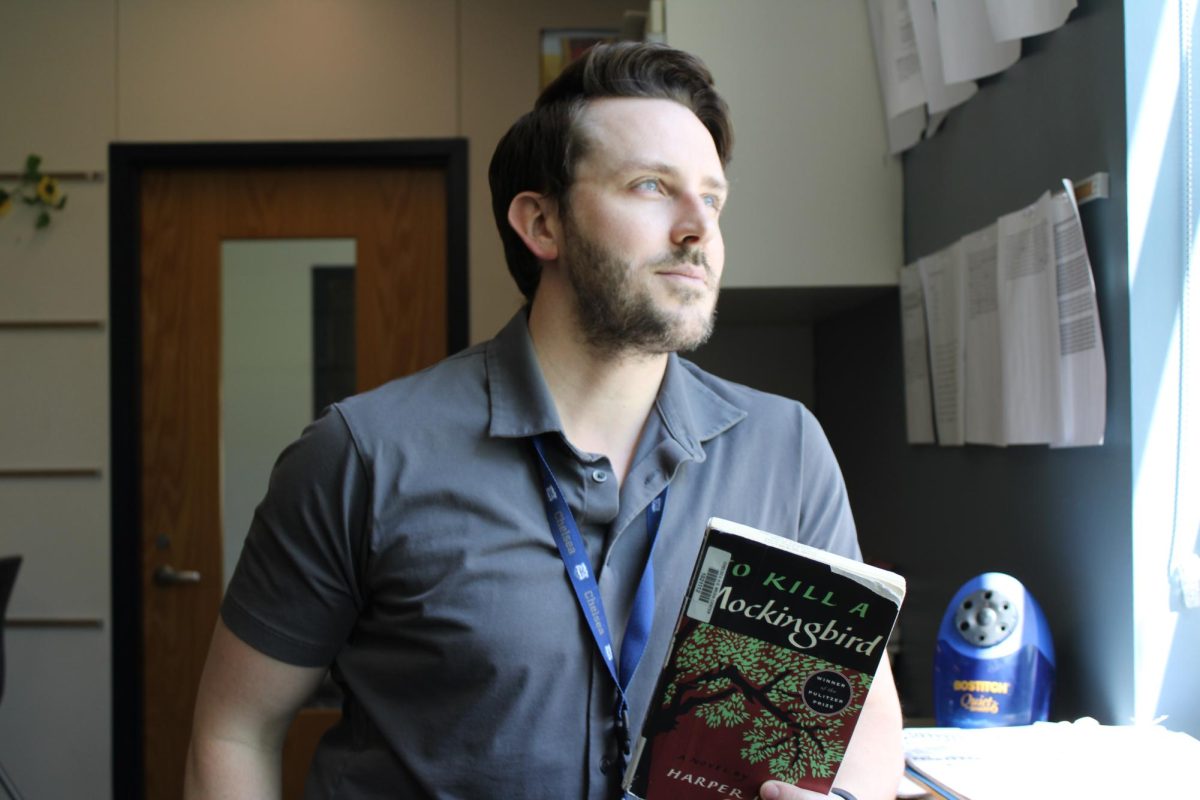
Changes to the 10th grade Honors English curriculum this year included a new book, moving “To Kill a Mockingbird” to the second trimester, and ending the unit on a mock trial assessment. Michael McLone, who replaced Dawn Putnam after her retirement, decided that students would use the course of two weeks to prepare for mock trials set around whether or not the novel should be taught in school. Due to the book’s handling of sensitive topics including race, it has been a source of controversy in recent years — something McClone attempted to address with the assignment.
“The mock trial was a product of my original awareness of the tension around the novel, it's divisive—that’s why we addressed things like why it had been taken out of schools, why it had been put back into schools,” McLone said.
McLone decided that the book should be taught, but in a unique way. He culminated the unit in a mock trial, mirroring the novel’s climactic courtroom scene. Regardless of their views on the matter, students were assigned two groups: those who opposed teaching the novel and those who supported it. They were then tasked with finding evidence to support their position.
“I thought, let's critique. Let's use all of our skills. And the best format for that felt like a mock trial that would allow students to put those skills to the test,” McLone said.
“To Kill A Mockingbird” is frequently cited as a classic, yet has been the source of criticism in recent years with some detractors viewing it as a white savior narrative and questioning its placement in many districts’ curriculums. Because of its divisive nature, students had to confront a variety of sensitive issues while debating the novel.
“I think some people were kind of avoiding the actual real question that we wanted to argue. I think that a lot of people focused on the idea of racism, rather than if this book should be taught in school,” sophomore Sophia Stanavich said.
McLone similarly noted some students’ lack of depth while discussing the novel. A lack of evidence and thoughtful analysis contributed to his dissatisfaction with the results.
“We saw surface-level depth drive lots of the discussion in certain mock trials. That was regrettable, where we couldn't get into the major issues or the legitimate evidence behind the major issues,” McLone said.
Students’ grades were based on whether they won the trial or not. In the eyes of some participants, this led to little consideration over how certain elements of the novel were handled.
“There were some people that they might be saying some things that they don't really mean, and they may be a little ignorant,” sophomore Mia Tian said. “Since our school has very little minorities here, it's very easy to seem ignorant. For example, some people might say they don't see a lot of racism around anymore, since they don't really go through it. But in the book, it's very extreme, and they can’t see a lot of sensitive topics.”
Sophomore Amy Stanavich expressed concerns about how students who were assigned to the affirmative side were unintentionally set up to look racially insensitive due to the pressure of the cross examination line of questioning.
“It did seem like people would say it was kind of like you are a racist if you disagree,” sophomore Stanavich said. “I feel like it kind of became more of like ‘I need to win’, rather than focusing on what the assignment was actually about.”
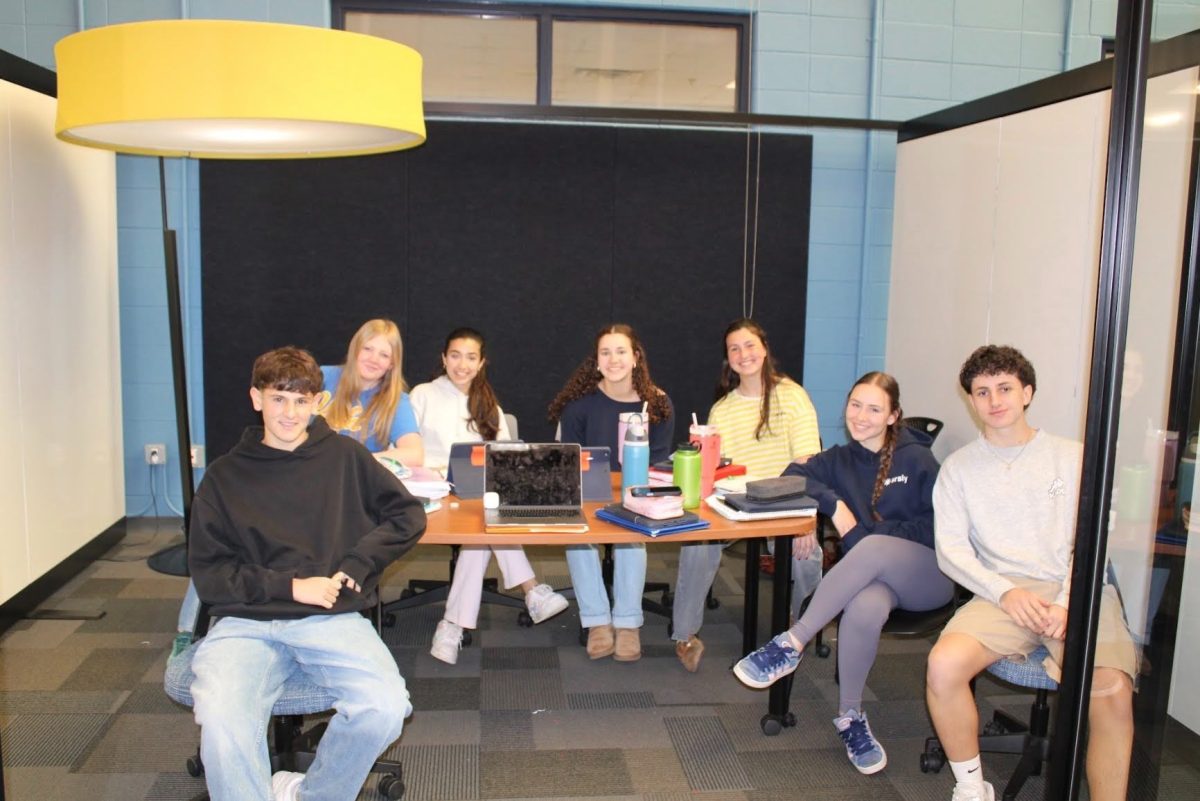
Because it was a group assignment and some students were missing the true meaning of the mock trials, and the need to win rather than focusing on the meaning of the assignment, some students in the group felt represented wrongly in the way their trial took place.
“We were relying too much on how one speaker had to speak for our whole group. I think it would have been more beneficial if we each got to have our own word,” sophomore Cecelia O’Rourke said.
Some students disagreed with the group dynamic, but McLone had reasoning behind the mock trials being a group project.
“Teamwork is always stressful, for sure, but when public presentations and grades are attached to it, it just exacerbates that stress. So I think that was a huge factor, and what I'd like to do moving forward is to somehow keep that factor. But the goal isn't to stress people [out], it's to introduce them to the importance of a deep argumentative process, understanding your information below the surface level, to engage with that stress of working with a team and being a cohesive team,” McLone said.
Some students, however, thought the discussion lacked depth in arguments. Others believed the group format created additional problems. Despite the problems within the mock trials, students still enjoyed the assignment, according to McLone.
“I think it was divisive. I think students enjoyed it. I heard remarks from fifth hour, I heard remarks from second hour and fourth hour, mentioning how it was fun. It was exciting. It was something very different they hadn't done before,” McLone said.