The Econ challenge is the hardest competition of the year for some of the best students in AP Econ. It's super time-consuming and just entirely mentally exhausting. The AP Econ students prepare for days in this rough time of year, where the hardest AP exams take place, just to put in their best effort to win or place high. These students In the Econ challenge are the best of the best, taking the hardest AP classes, and qualifying for the hardest school challenge.
“Econ Challenge is a competition. It was at the Federal Reserve building in Detroit, and basically, it starts out with testing, and you have to complete three tests. Two are individual, one is with your team,” Leo Baushke (‘26) said.
These students go on trial for days to put in all their effort to win for all the students at CHS. It takes time out of important things like sports and academics, even become a conflict that postpones AP studying.
“I've sacrificed a lot of my time as we got together as a group, and we went and studied a lot for the quiz bowl. I could have been doing other stuff, like studying for other classes, or getting ready for lacrosse games,” Liam Favre (‘26) said.
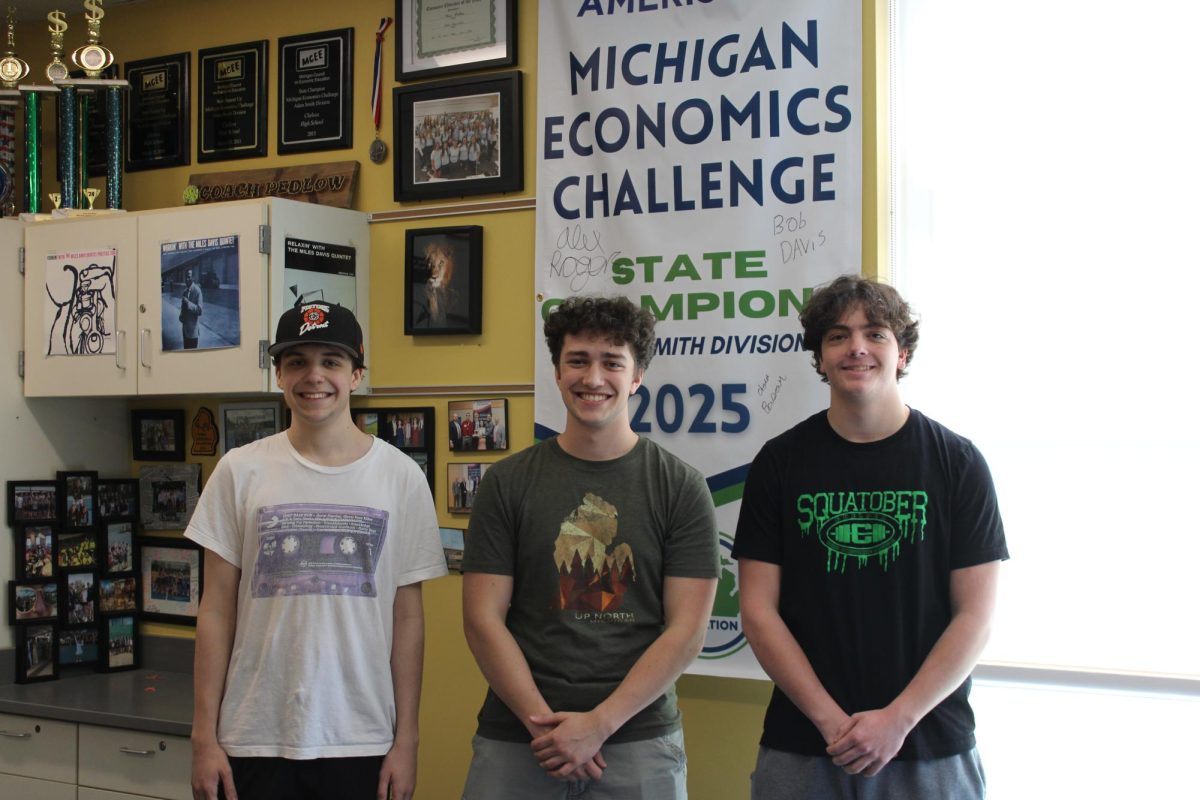
Favre, Gio Bickel (‘26), Baushke, and their fellow Ap Econ students spent the last week studying and working their tails off to try to win and place number one, but even that couldn’t save them. Favre sacrificed tons of time that he could’ve been spending on other things, not even guaranteeing victory.
“We did more poorly than we thought. We ended up getting fifth place in the multiple-choice tests. We should’ve practiced more on our weak points, but we didn’t have enough time to finish our study session,” Favre said.
Even though they prepared for hours, thought they were set and ready for the competition, it's not just Econ, but it's one of the hardest competitions of the year. This is one of the hardest competitions; most people don't even make it to the part they studied for.
“We never really got to see what made it hard, because we didn't get to the hard part, because we failed so hard, we failed so terribly during the testing part,” Bickel said.
Indicating the challenge is way harder than it seems, and even though they studied that hard, they couldn’t even make the cut. This competition means a lot; winning could have done a lot for them. It would’ve made them keep going for days. If you think this is the hard part, here's what they could’ve gone through if they had won.
“The top three teams in the tests go on to the quiz bowl, where they ask you questions, and you have to write the right answer down. The team that gets the most questions right wins. And then if you win that, that's the state competition,” Baushke said. “If you win that, then you go down to Atlanta and compete in nationals, which is similar to the quiz bowl, but there are also other competitions.”
This competition is a huge deal. The kids you see as geniuses in CHS have to face even harder competition in Michigan, but that doesn’t even begin to scratch the surface; they still had to win the basic competition, then Atlanta, then nationals. So, how good are these kids? But I think the real question is, Why is this so important?
“It's important because it creates a competition, and it gives an incentive to kids to study econ more, which is important, because [AP] econ is not a required class, there's a lot you’re missing if you're taking normal econ, that you don't learn. I think it's a pretty important subject, even though it's not required in all schools,” Bickel said.