We are all held to standards in everyday life, from school, to the workplace, and the sports/clubs you might participate in; people expect certain things from you. But the standards we live by don't just stop there; there's another extremely prominent category of standards that a lot of young women find themselves shuffled into, beauty standards. Beauty standards seem to be engraved in many people's minds, and it's something that everyone seems to abide by, but very few want to acknowledge its prominence in society. And if young girls comparing themselves to super models with eating disorders wasn't bad enough, recently another factor has entered the picture, weight loss drugs.
“When young girls see celebrities and role models that are really skinny and are on drugs like [Ozempic], they begin to heavily compare themselves. It gives them this false idea that they need to change everything about themselves and not be who they were born to be,” Sophia Bellizze (‘28) said.
Beauty standards have existed for years, and the standards around women's beauty seem to have always been especially strict. Most girls are told from a young age that they shouldn't compare themselves to others, but when societal norms like “heroin chic” and “Ozempic skinny” are being pushed on celebrities, young girls often feel the need to follow suit.
“There were so many times in my childhood when I felt like I needed to look a certain way, whether it was because of that kind of 2000s standard. And looking back, I just don't think my body was ever meant to look that way. And I think that's what's happening with this Ozempic era. Now, young girls are seeing celebrities who, whether they were plus-size before or were just heavier than they want to be, are going on Ozempic. And so I think all people, but girls especially, are seeing that and thinking that that is the standard that they should be living up to, and that's the body type that they think they should have,” Alyssa Knupp, CHS English teacher said. “I think that's a dangerous line to walk, just because it does put these pressures on at an early age, and at that age a lot of girls find themselves thinking about what they look like, as opposed to what we are saying or what we are doing with our actions, which is obviously where I believe more value comes from.”
While comparison is a major problem with normalizing weight loss drugs, there’s another deeper rooted issue. Some people are using the drugs for the intended purpose, health and diabetic reasons, but others are using it to skip the effort weight loss takes. Many people have struggled with weight loss for years and worked endlessly to lose the weight, and haven’t been able to. These drugs might seem like a relief, giving them the long-awaited breath of fresh air by finding a solution that works for them. But some people seem to have skipped the effort and are using the drug for purely cosmetic reasons, and before turning to pilates or cardio to try and solve their body image struggles, they turn straight to the fastest solution, weight loss drugs.
“It gives young girls the idea that you can't work for it, but in reality, most of the time you can go to the gym and look good and feel better if you put the work in. But [weight loss drugs] give the idea that you can’t do it,” Elise Hugg (‘28) said. “So it’s almost like a lazier version, and is not teaching them hard work.”
Shoes and shirts shuffle in and out of style in what seems like a full circle. Trends come and go, and just like the scrunchie, everything seems to have an eventual comeback. Which has us wondering, do beauty standards follow those same principles?
“I would describe it almost like a roller coaster, because you do see that trends come in and out. And I think that trends around weight are very similar. When I was young, there was a big focus on that Y2K kind of style, heroin chic is the term that gets thrown out a lot, where it's just a lot of focus on bare skin,” Knupp said. “And then when I was in college, it was more this idea of, no, all bodies are beautiful, and we're celebrating everything. And then now in 2025, I would say that we are seeing more of that Y2K both in style and in our mindset of how we present our bodies and how we want to dress, but also how we want to look. So it seems Ozempic, and just different styles of clothing kind of coming back into circulation. People are more interested in looking thin and having things that are a little tighter on them to kind of showcase a thin body.”
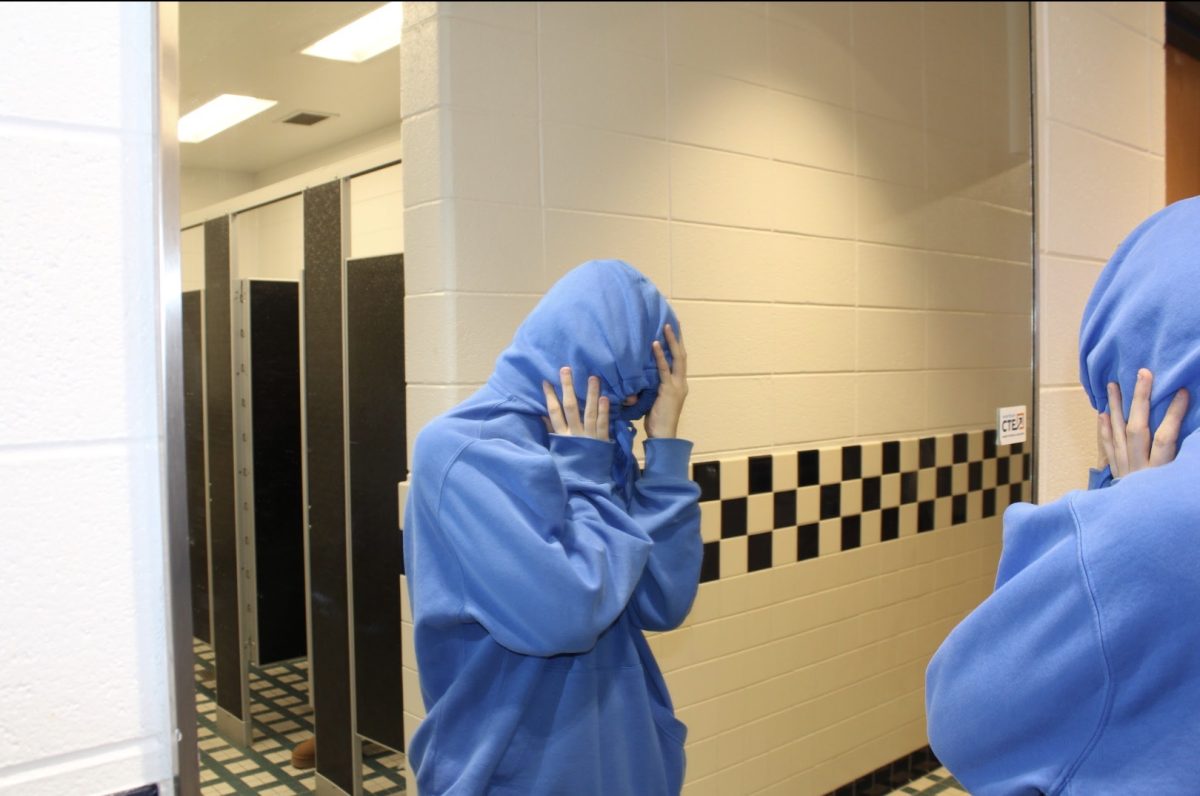
Although beauty standards have arguably always been present in society, at what age did we notice and begin comparing ourselves to them? While some still carry on with similar routines as when they were younger, others wake up before sunrise to pamper their faces and fix their hair. When did the way our hair or eyebrows look start to matter? When did our looks have control over the way we feel about ourselves?
“As a young girl, I felt like I could just get out of bed and put on some ridiculous outfit, and nobody really cared or judged my looks. But now, walking with a ridiculous outfit or a bad hairdo, it feels like everyone's gonna be looking at you, everyone's gonna be judging you. Now I feel like I’ve got to put a lot of effort into my looks or I’ll be judged,” Eve Wagner (‘28) said.
Being uncomfortable in your own skin can happen to anyone, and it’s important to remember that insecurity doesn’t discriminate; most people experience it at some point. In fact, a 2023 UN Development Programme found that 6 in 7 people are insecure about their appearance. So next time you think about making a comment about someone’s body, whether big or small, or even in a joking manner, just pause for a minute. Remember that your words have power, and chances are, they are already being hard enough on themselves. At the end of the day, all bodies are beautiful—including yours.
“For people who are thinking about their own bodies and trying to figure out what body positivity looks like in a world where people are using Ozempic for cosmetic reasons, or feeling like they have to constantly compare themselves to influencers or athletes that are present in the media. I would just continue to circle back to that quote from earlier, bodies are built differently, and it's more important what you do with your body rather than what it looks like,” Knupp said.