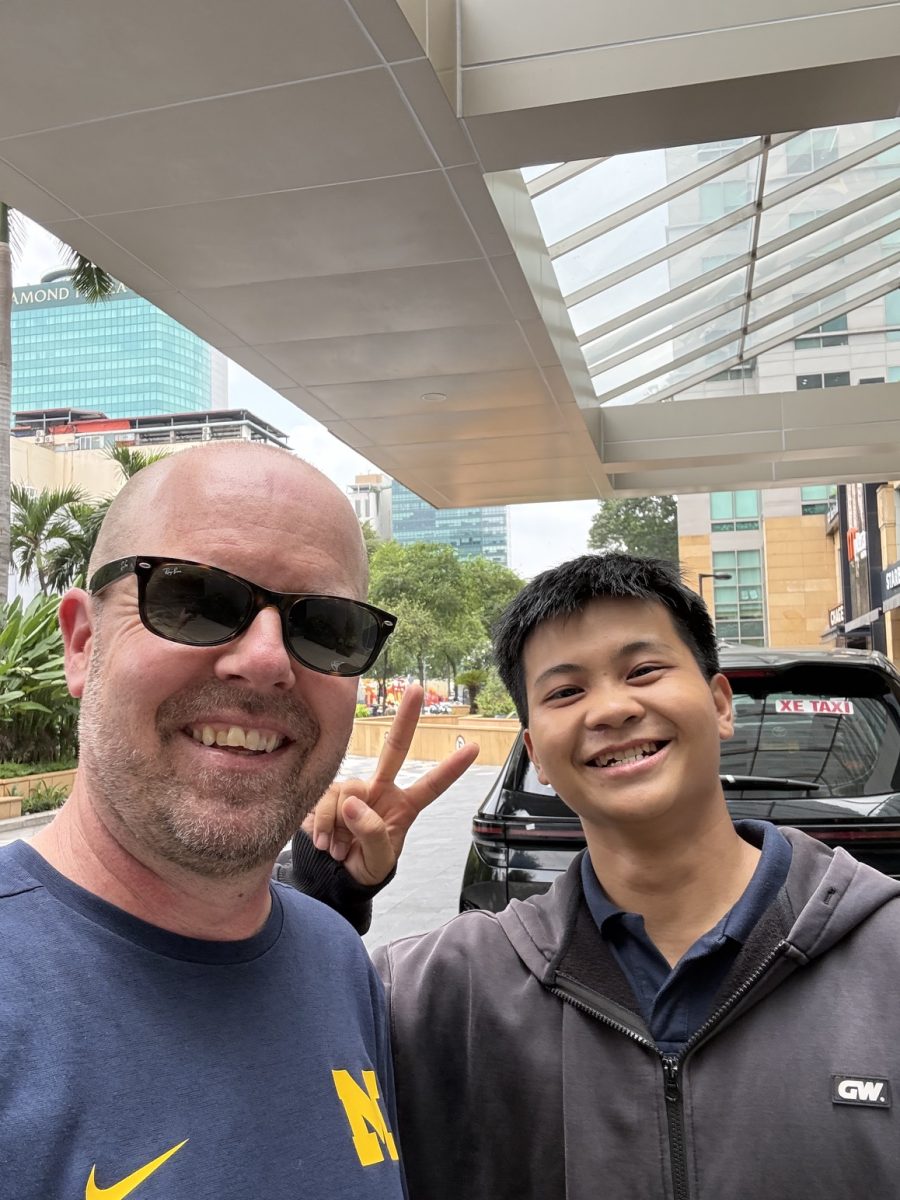
When CHS’s resident AP Economics teacher Matt Pedlow traveled abroad to Vietnam to lead an AP workshop through the College Board, he expected to encounter noticeable differences in how schools operate. Instead, he found that the AP course structure remains consistent even across countries.
“These workshops are more about going through what an AP course looks like and how to get students to be successful,” Pedlow said.
Teachers at the workshop were primarily from American or international schools, which contributed to the familiarity. As a result, the classroom expectations and curriculum did not differ as much as expected.
“There wasn’t too much difference,” Pedlow said.
However, while teaching methods appeared similar, the students’ approaches to AP exams revealed a more significant difference. Pedlow noted that in Vietnam, students would push the limits of the program in ways less commonly seen here. This difference is not about how AP is taught, but how it is utilized.
“They have students who are taking AP exams who never took the AP class […], so imagine our students taking 8-10 AP exams their junior year,” Pedlow said.
For students like Winnie Pham (‘28), an exchange student from Vietnam, that kind of approach is necessary. Access to AP classes can be limited, making self-study incredibly important. This allows students to go beyond what their schools formally offer.
“I believe self-studying AP exams allows me to take more classes beyond at school […], and then I can take the exams,” Pham said.
However, that introduces added pressure, especially for international students. Language barriers and high expectations make failure detrimental due to both academic and financial consequences.
“I feel pressure because English is not my first language, and also I'm scared [that] if I get a score that is not really high, I will waste my time and also my money,” Pham said.
Despite these challenges, the motivation behind taking AP exams does not waver. These exams are not just an academic milestone, but an almost-compulsory step toward the students’ life goals. They are closely tied to opportunities for studying abroad and building future careers.
“The degree I earn after finishing American college will help me have more opportunities for my dream job,” Pham said.
Although AP courses follow the same structure worldwide, the reasons students pursue them can differ greatly. In the U.S., they are part of a balanced academic schedule, while in other countries, they can be a necessary tool for future achievements. Pedlow’s experience shows that while the system is standardized, student ambition and societal pressure shape how it is utilized.
“Entering American colleges is one of the most important things in my life, because [it] is one of my dreams and also my family’s,” Pham said.